
Sunday morning and my eyes open before the sun. Today is my day off, but yet, my body is in routine—so I’m awake. Outside, the wind howls and the clouds look like they will be thick when daylight comes. This would be a perfect morning to sleep in—but again, my body is used to a routine, so I am awake as if today was just another day on the time-clock.
It’s amazing how our body fits into a routine. I am rarely late, but I have a terrible fear of becoming so. I suppose this fear came from past experiences. I suppose this came from my time on The Farm.
Being late meant you didn’t eat. Being late on The Farm meant someone was going to yell very loudly and yell for a very long time. It meant a day of humiliation. I suppose this created an inner-body fear that my subconscious refuses to let go of, which is good, because I am rarely, if ever late.
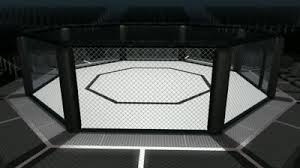
I watched an interview of an amateur cage fighter with hopes of turning pro. He described the thought process throughout his time in training.
“It’s not just physical,” he explained. “It’s also a mental game and if my head is in the wrong place, then I’m in for a long night when the fight comes.”
After training and the weight cut, which the fighter said can be brutal; everything files down to a point.
“Everything I’ve done, all the work I put in, all the training and strength conditioning, all the time and direction from my coaches, the mental preparation, and the obstacles I’ve overcome—all of it was to get me to this point.”
“I have to face what’s in front of me,” he said. “I can’t look beyond that. I can’t focus on anything else. I have to focus on my strategy and stick to the plan.”
He laughed, “I’m not an easy guy to be around when I’m training for a fight. Just ask my wife. Any little thing can set me off. That’s why she stays away from me.”
Closer to the fight, the fighter explained that time gains momentum. As the day starts to move, “It’s almost like a blur,” said the fighter.
“I just move through the day and move one step closer to that zone. And when the fight time comes and when I walk out to the cage, it’s like a switch turns. I can’t explain it any other way.
My hearing sort of changes. I mean, I can hear you but not the way hear you now. I’m in a zone. You know? I can hear my coaches and I can hear the ref. I can hear the sound of my opponent’s footwork, so I know when he’s coming for me. I’m thinking and my mind is working . . . but it’s like I’m a machine and my body knows what to do.”
“If I can’t trust my ability, then like I said, I’m in for a long night when the fight comes.”
Years ago, I was introduced to bench shooting. The first rifle I fired was a .308 with 168grain, tactical round. It was nighttime and we sat outdoors, separated in wooden cubicles that faced downrange. The rifle was placed on the bench, and ahead, the target was posted on its stand.
I was given instruction by a friend on what to do and how to do it. Then I placed the bullet in the chamber and folded the bolt downward before pushing it forward. I was wearing a headset, so all I could hear was the sound of my own breath.
I aligned myself forward with my eye at what I believed was a respectable distance from the scope. I focused on the target ahead, which was 100 yards away, and I concentrated on my breathing
I placed my right hand around the stock of the rifle and wove my finger through the trigger guard above the trigger.
I was told, “Remember what I said; don’t put your finger on the trigger until you’re ready to shoot.”
“Take everything in first. Breathe in, then aim, focus, fire, and exhale.”
As strange as this may sound and as violent of an action as it may seem; there was something calming about firing a high powered rifle. I suppose the discharge of the bullet was therapeutic and the sound of the rifle’s bang and its sharp recoil was more than just a discharging bullet; it was a perfect discharge of an internal aggression.
I imagined myself alone, like a sniper, somewhere in the middle of the wilderness. I tuned everything out.
I tuned out the other shooters who sat at the surrounding benches. I focused on my target with the rifle’s barrel resting on a bi-pod and the butt of the rifle resting on a sand-filled pouch.
Our body is at its stillest point between the moment of inhale and exhale. In the quick instant between breath and before my exhale, I pulled the trigger and the rifle let go of its rocket fire.
My shot was accurate; however, my positioning was poor. I did not shoulder the rifle properly, so when the rifle kicked back, the scope crashed back against the bridge of my nose. And it hurt. My eyes watered as if someone punched me in the face.
The man teaching me how to shoot laughed.
He said, “I bet you’ll never do that again.”
He was right.
Each time I prepared to take my shot, I made sure to shoulder the rifle properly. However, each time I went to fire, my stillness was interrupted with a flinch. This was my subconscious trying to protect itself from the recoil. This was an inner-body fear that I had to learn to comfort and overcome. Each time, I felt the flinch, I backed off the shot because flinching would cause me to move and movement would cause the bullet to fly off and miss the small, dime-sized target.
I had to learn to trust my body’s ability. I had to learn to trust in my equipment and my knowledge on how to use it. Eventually practicing at 200yards, I was shooting in groups of five, and placing each of my five rounds in the designated target, which is good for someone without much training.
Fear is an excellent motivator. In its defense, it teaches us to cover up and react. Our body finds its natural rhythm and in a sense, we either learn from our fears or we flinch and hesitate.
Like me with the scope bashing my face or the fighter listening for the switch of his opponent’s footwork to warn of an approach or head- kick, our body has its own defense mechanism. This is that inner-body fear that can keep me from hitting the center of my target or cause the cage fighter to hesitate in a moment of battle.
If I do not care for my fear properly—I will flinch or hesitate and lose focus.
I have to trust in my ability.
I cannot tense-up or give in and stall to anticipation.
I have to trust my thoughts as well as my body because if I flinch, it will cause my body to move, and the wrong movement will cause me to lose aim and miss my shot.
That cage fighter was right.
Life is not just physical.
It’s also mental, and if my head is in the wrong place then I’m in for a long night.
I firmly believe that any goal is attainable depending upon my desire to reach it.
If my will and intent outweighs the odds against me . . .
Then nothing can hold me back
 The Written Addiction