
It is to the best of my understanding that there has never been anyone in the world who can say or claim that they have either monopolized or cornered the market on happiness.
With that being said, I do believe that happiness is a craft. It takes work. In fairness to ourselves and to our own lives as we relate to the world and all the jazz we have to face, or at minimum, with all that we encounter or deal with on a daily basis, we have to understand that life is not a work-free environment.
Not at all. In fact, life is quite the contrary.
Nothing worthwhile comes easy – or so they say.
No one walks onto a field at practice and automatically becomes an expert.
This is a process and so is happiness.
No one knows the right answers all the time. And sure, we make mistakes. We make errors in judgment or, at times, perhaps we move too quickly or rush to an assumption or an opinion.
But this is where experience comes from.
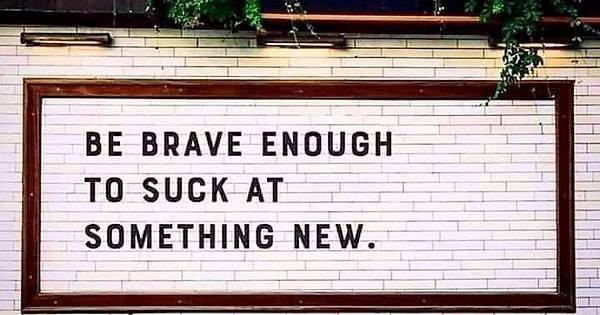
This is how we learn – so, in a sense, happiness is something that needs to be learned. However, before we reach a level of expertise on this or any subject, we have to endure the learning curves and the moments of so-called failures. We have to encounter moments of trial and error. We have to understand the dirt on the floor because if and when we fall and hit the ground, we have to understand that the dirt on the ground is not the enemy. Neither are the concepts of failure because it is our so-called failures that led us to the steps which allow us to reach success.
It is of no help to butcher ourselves in our minds or to be overly critical or to self-deprecate or bash ourselves.
There is no benefit in being our own worst critic or enemy or use the word stupid when describing ourselves.
I go back to a lesson I learned while sitting in a doctor’s office. I was young and in crisis. I was at the end of my rope and yes, at the time, I swore that I must have been crazy.
I was in terrible pain and emotionally, I swore there was something wrong with me.
There had to be. I must have been crazy because why else would I feel this way?
Why else would I be in such a terrible conflict all the time?
I had nothing left in my tank – so-to-speak.
I was empty and alone. I was sad and heartbroken.
I was angry too because why me?
Why do I have to think, believe or feel the way I did?
Why was I the one with this type of emotional chemistry?
Why did I have to endure the outcomes or undergo certain abuses or betrayals?
Why me?
Did I deserve this?
Was that it?
It’s not that this was a personal attack on myself. It’s not the fact that yes, there were things that happened that shouldn’t have happened – This is true.
Yet these things did happen which means life is going on. In the context of time and at that moment, I had reasons to think, feel and believe in a way that was hard for me to deal with.
But why would anyone be able to deal with this?
There were residual effects to unresolved challenges and tensions that were left behind in measures of heartbreak, betrayal, emotional trauma and moral injury.
A therapist entered the room –
I told the therapist that I thought I was crazy.
I swore that I must be crazy.
Why else would I be in crisis mode all the time?
I can remember the conversation that took place.
I remember the therapist answered me quite calmly.
“You’re not crazy . . .”
It certainly seemed as if I was.
“The reason I can tell you this is because crazy people don’t think they’re crazy.”
The therapist told me, “They think everyone else is crazy but not them.”
“No, they think that they are normal.”
The conversation went on about this from a more figurative perspective.
That’s when the therapist explained how this was a challenge of me coming at myself with harsh and unfair judgments.
The therapist corrected me when I assumed that maybe I was stupid.
“Stupid people are like crazy people . . .”
“They don’t think they are stupid. They think they are smart – it’s the rest of the world that’s stupid.”
It was the therapists suggestion that the fact that I know better and that I want more (and to be better) means that I am smart enough to know that I command better of myself.
And that’s good.
I never forgot this.
I never forgot where I was at the time either which, of course, is another story altogether.
However, I can say that there is truth to this. There is truth to the painful accusations of internal judgment and how we cripple ourselves with matters of thought. Too, we can also learn from this and understand ourselves from a new and different perspective which means we can put down the bat that we used to beat ourselves up with and allow ourselves the chance to learn, to adapt, to improve and to heal.
If I were stupid, I wouldn’t have the wherewithal to know better. If I were truly crazy, then I wouldn’t have a conscience or remorse or an emotion which would otherwise allow me the ability to decipher between the understanding of right or wrong and fair or unfair.
The truth is if I am to find happiness, then I have to find a way to understand happiness as a craft.
I like this idea . . .
So, to perfect this, I have to find ways to perfect this as a craft by any means, which is not to say that my happiness is going to match yours nor does this mean that my road map is the same as anyone else’s.
Instead, this means that I have to find what works for me. This means I have to learn what is helpful and/or unhelpful to the process of perfecting my craft. Therefore, as I move forward on this new journey, I have to understand that the process of life is imperfect.
And so am I – perfectly.
I understand that hardships will take place. I also understand that heartache is part of life.
So are disappointments. So is sadness and so are the unfortunate experiences which we encounter in our lifetime.
This includes all the good, the bad, the ugly or the in-between.
This is not a bulletproof plan on how to live our life nor do we always know what to say or do. Sometimes, we misspeak or we misjudge or we worry too much.
In fact, perhaps, we worry that our version of happiness is too far from our reach.
But yes.
We are going to fall.
We are going to land on our asses more times, again and again.
But as we rise back up and as we learn which way to pivot or how to roll with the so-called punches, or as we learn to shake off the cold, or as we learn new ways to maneuver or learn different navigation tactics to save ourselves from repeating the past, our levels improve on a greater spectrum.
The novice advances and yes, as we climb from our own self-stirred madness or as we make our way up from the ranks of beginner to expert, eventually, we come to a movement where judgments improve and the impairments of our thinking are less intrusive. We disregard the novice mistakes of our journey because they become a thing of the past –
(if we let them be).
I have seen people encounter a new position at work or as people become new hires and work in new systems; I have watched as they come across a new challenge or find themselves in uncharted territories. They face the pressures of their own learning curve and it is here that they find themselves in moments of internal judgment.
We all go through this.
We face the tough challenges of imposter syndrome, which suggests that eventually, people are going to look at us and realize that we are either a fake or a fraud. Imposter syndrome suggests that eventually, we will be exposed as someone who is either unworthy of our position or incapable because our limitations are a challenge that outweigh our abilities.
No one walks into something new without discomfort. No one knows the right thing all the time.
Including you. Including me. Including the rest of the world.
We are all a work in progress.
We are not so enlightened and yes, even people whose talents are indisputable or so beyond compare that they seem as if they have always been an expert – even they have to face the challenges of a learning curve.
The difference between an expert and a novice is the expert never gave up.
I have been told this in different ways throughout my life.
I can say this is true with so many things.
I can say this is true with work and our career. I can say this is true with the difference between a novice or hobbyist and experts.
And so –
I am not an expert in many things and yes, as I make my way up through the ranks in my professional life, I am also looking to improve my personal and emotional life as well.
This means that to become an expert on the subject of happiness – as hard as this can be at times, the last thing I can do is quit or give up.
Otherwise, I will go back to that self-destructive assumption that somehow, something about me is either defective or unworthy.
Happiness is a belief system.
So is sadness.
The uphill battles in life will come with challenges.
This I know.
I also know that at this point, I want to be happy, which means to become an expert on this, I have to keep working at it.
I have to learn new ways to navigate and maneuver through the otherwise murkiness of hard times and yes – tough shit!!
Life is going to happen and no,
nothing will always be fair (including you).
The only thing that can be consistently fair is the way we treat ourselves.
Otherwise – all else is beyond our control.
Master this –
And you will have mastered the art of happiness.
 The Written Addiction