
There are two words that we use when we look to define time. There is before and there is after.
I love these words.
Before and after.
I know them well because there is always a before. There is always the truth and there will always be who I was, who I am, and as for who I want to be, I have confirmed that between the before and after is now.
This means that now, or this very moment, is far more pivotal than we think.
Understand?
What we do, or not do, or which way we choose to go, or not, and what we say or refrain from is going to determine the course we take for the rest of our lives.
There is another word, which I love just as equally, and I love this word because it defines the past, or life as it was.
Unalterable.
Nothing can change what took place. Nothing can rewind the clock. There is no way to reclaim what was said or done. However, the change can set the stage for the here and now.
It was suggested to me to look at who I was before. Or, if I was struggling with fear, or living with anxieties or past tensions, or in the face of mixed emotions and confusion, or even more simple, looking at the undesirable nature that sparked my need to encourage and execute my transformational change, I was asked to look at who I was before.
Who was I before I learned about my intimidations?
Who was I before I realized what happened or the disgust of what was done to me?
Who was I before the first time I was bullied, made fun of, or betrayed? Who was I before I believed that I was just a fool?
Who was I before I experienced my first theft, which can be any kind of theft that ranges from simple things, like someone taking money or something that belonged to me, or there are thefts of services, which is the emotional result and the outcomes and an awareness that left me hurting, or wondering if kindness was even real.
Maybe I “deserved” what happened . . .
Is that it?
No, but the mind can draw some painful conclusions.
This is partly why I am an advocate.
I would like to see myself as a voice for those who lack the language to tell their story.
However, while I do my best to be relatable and, in my efforts to adapt and to understand, I have learned to recognize that I do not see the same way as others.
I am unique, the same as everyone else is unique in their own way.
At the same time, there is a relatable challenge that is felt by people who live with daily depression. There is a relatable nature that bonds people who can understand or who can empathize and without explaining, without saying anything, there is comfort on finding out that, above all, we are not alone in this world.
I never talked about the things that happened in my life.
Why would I?
What would happen if people knew?
Why would I tell anyone about the times when I was hurt?
Why would I allow myself the uncomfortable sense of vulnerability? With this being said, why would I voluntarily admit to the thoughts or the assumptions that I am weak, or gullible, or that like an army of one, I am susceptible or otherwise defenseless? Thus, why would I tell anyone that I have weaknesses?
I have vulnerabilities.
I have weak spots and fears and I have anxieties that perhaps someone might notice that I am weak. Thus, they will take advantage, and take what they want from me. Of all the fears that I have, my biggest fear is to be defenseless and beaten.
As my trauma suggested to me, I would always be that weak little boy who was randomly abused and taken advantage of when, in fact, all I wanted to be was involved, or included, or to play, or be invited, or be loved.
Life might not be this intense for other people. However, I will dare to say that everybody has something. Everyone has a moment in their life that was not only pivotal, but life-changing, or in the face of joy and pain, everyone has experienced a moment when they assumed they were welcomed, only to learn that there was a fault or a flaw, and there was a lie, or something deceitful in the background which occurred and hurt them enough to say, “I will never allow myself to go through that again!”
I am an advocate for my inner child. I am his voice; and more, I am his keeper and protector and the encouragement for him to come out and play because, to me, he is my before.
Who was I before I was hurt?
What do I admire most about that person?
What would I like to do about this? What was the most important thing about my before?
What was special about this to me?
I want to be that person I was before.
I want to believe in purity the way I dud before my purity was tainted.
I have met with people who chose to relive their youth in a way that was not only encouraging to me, but also helpful in the sense that they encouraged me to remember who I was when I was at my best.
What was my best quality?
Why did I allow this to disappear?
One can suggest that the betrayal or recognizing deceit can destroy the giving nature of our soul.
This can destroy the purity of the way we love each other, or the way we see each other, or the way we give freely because the times we gave freely were way too costly to do that again.
One can offer that when someone is burned in their past, they assume that all things are the same. Hence, there are times when our brain expects the pain to resume.
So, to survive or to avoid the bouts of shame, we have the deterrent of our internal voice, which warns us constantly to be careful — because we were burned like this before.
Who was I before I learned about my inefficiencies?
Who was I before I learned about my educational and positional intimidations?
What caused me to allow the assumption that people are better than me?
If I am better than anyone, what led me to the belief that there are levels of better or worse?
Why is there a separation between beautiful, ugly, smart or stupid? Who gave me (or you) the right to dictate or determine what’s cool, or what’s not?
The most difficult hurdle to overcome is our inner-judgment because we often judge ourselves harshly. In the reflection of our imperfect self, there is a fear of our so-called imperfections, and a worry and a disdain that perhaps we are not fit, or beautiful, desired, or wanted.
So, we hide or wear a mask or act reckless and pretend like we don’t care.
But, we really do.
I am happily detached from this now, or at least I am trying to be, which is a course that took me years to follow.
Therefore –
I do not suffer from depression. I live with it.
I do not suffer from anxiety.
I live with it.
I have struggles, the same as we all do. However, I refuse to suffer and more, I refuse the inner voice and old conversations.
I dispute them and their truths. Before I allow my before to destroy the moment where I’ll regret both my before and after, if now is the key into which the cylinder needs to turn, then let me unlock this door.
Let me unlock this moment now before allowing my days before now to ruin the moments which come after.
I am a person who needed help.
I needed help then and I need help now.
I am only human, which means that I am consistent. Therefore, I am a growth in progress. However, I was also a person who was afraid to ask for help.
I was afraid to be that kid or that little boy who stuttered in front of the class when reading out loud.
I was afraid to be laughed at and be the fool again.
I was afraid to be weak or vulnerable.
But more, I was afraid that you would see me for who I am, and then what?
Who would love someone like me?
Who would want someone with scars like mine, or the stains and memories or the traumas? If this were ever to come to light, who would look upon me with admiration? Who would see me as beautiful?
Who would look at me and see me as worthy?
Or was I afraid that people would look my way and see me and find themselves thinking with a diseased reverence of pity?
I don’t want to be pitied.
No one wants to be a burden.
No one wants to be unlovable or ugly.
No one. Including me.
I am honest about this because I have no choice. Plus, I am brave here because there is no one here but us. As a result, I allow that little kid the right to come out and play (so he can meet you) but please, if you can, be gentle.
He is afraid to be found out and hurt (again).
And so am I.
I have learned about this thing called imposter syndrome, which I have heard that 75% of people live with this. This means 75% of people are afraid that someone is going to pull their curtains and expose them as some stupid, or untrained fraud.
They say 75% of people live with this.
And me?
I say the other 25% are liars . . .
I want to help.
I want to find help too because there are times when I am unable to be at my best, like, now for example.
I am a person. I am afraid.
I am scared that I will never reach my dreams or find the road to happiness.
However, and more importantly, I have found that I am more susceptible to depression and depressive thinking when I am not loyal or true to myself.
I am not happy. Therefore, I have to do something to make my happiness my priority.
No one will do this for me. So, if it is up to me, then let this be up to me.
I am lost at times or unhappy about my choices.
But that does not mean I don’t have choices.
No, this just means I have to endure.
This means I have to quiet that frightened boy inside of me and say, “Don’t worry. I know you’re in there and I know why you’re afraid.”
I have to tell him that we are in the middle of a storm, but not to worry. I am not so weak anymore and no one who hurt us before is around to hurt us again.
Besides, even if they were, trust me when I tell you — no one will hurt you like that again. Not as long as I am around.
And you . . .
This is a side that I never showed anyone, but since it’s only us two kids playing in the sandbox, I thought now would be a good time to share my toys and take turns to play nice.
It’s not an easy thing to do.
You know?
Most people don’t play fair.
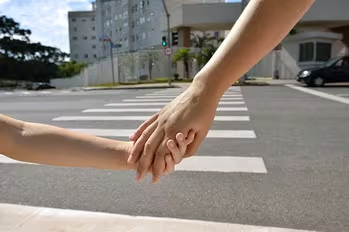
Most people don’t wait their turn and most people forget how great it is to hold someone’s hand while crossing the street.
Once more, thank you Mr. Fulghum.
Kindergarten class had it right!
I wish you knew how far your words reached or how lifesaving they were to me.
I think you’d be surprised!
 The Written Addiction